
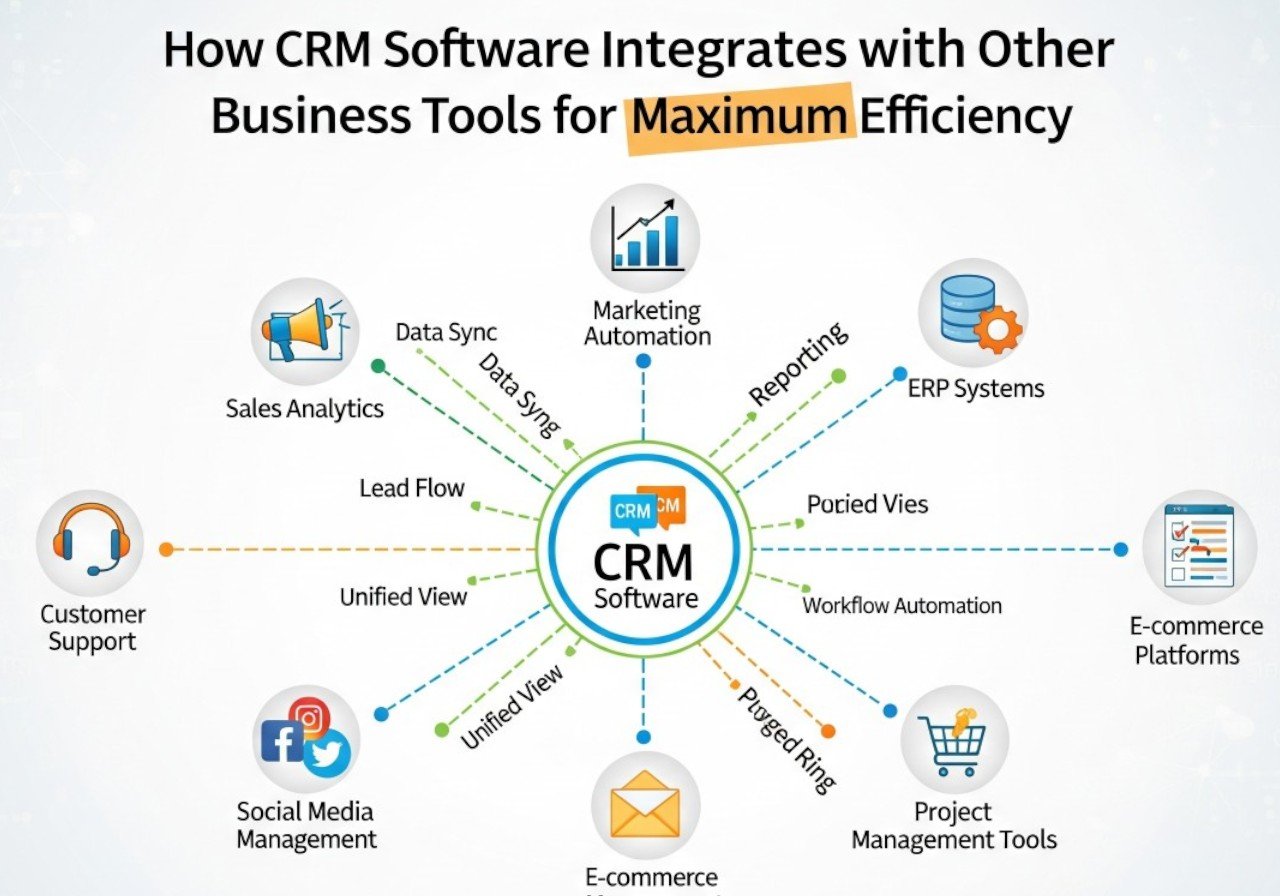
In today’s interconnected business environment, isolated systems can slow down processes and create inefficiencies. Customer Relationship Management (CRM) software doesn’t operate in isolation—it integrates seamlessly with other business tools to streamline workflows, improve data accuracy, and boost overall efficiency.
CRM integration allows companies to centralize data, automate processes, and ensure that every department—from sales to marketing to customer support—has access to the information they need. This connectivity enables smarter decision-making and enhances customer experiences.
Section 1: What is CRM Software?
CRM software is a platform designed to manage customer relationships by storing interactions, purchase histories, and communication details in a centralized system.
Modern CRMs go beyond basic management. They include automation, analytics, and integration capabilities, allowing businesses to connect their CRM with tools such as email marketing platforms, e-commerce systems, accounting software, social media, and more. These integrations ensure that data flows seamlessly between systems, reducing manual work and minimizing errors.
Section 2: Key Integration Features of CRM Software
- Email Integration: Sync emails with CRM to track conversations and maintain a complete history.
- Marketing Automation: Connect with marketing platforms to run campaigns and track engagement.
- E-commerce Integration: Link CRM with online stores to monitor customer purchases and behavior.
- Accounting and Billing Integration: Sync invoicing and payment data to streamline financial operations.
- Social Media Integration: Monitor interactions across social platforms to understand customer sentiment.
- Project Management Tools: Connect tasks, deadlines, and project updates with customer data.
Section 3: Benefits of CRM Integration
- Centralized Data: Consolidate customer information from multiple systems into one platform for easy access.
- Improved Workflow Efficiency: Automate repetitive tasks such as data entry and reporting.
- Enhanced Collaboration: Teams across departments can access the same up-to-date information.
- Better Customer Insights: Integrating data from multiple sources gives a 360-degree view of each customer.
- Accurate Reporting: Combined data allows for comprehensive analysis and informed decision-making.
For instance, a retail company can integrate its CRM with an e-commerce platform to track online purchases, segment customers for personalized promotions, and automatically update sales records in accounting software. Similarly, a service company can link CRM with project management tools to ensure that client interactions, service requests, and project updates are all connected.
Section 4: Tips for Effective CRM Integration
- Identify Key Tools: Determine which platforms—marketing, e-commerce, accounting, social media—are essential to integrate.
- Ensure Compatibility: Choose a CRM that supports integration with your existing software ecosystem.
- Automate Data Flow: Set up automated syncing to reduce manual work and errors.
- Train Teams: Educate employees on how to use integrated features effectively.
Conclusion
CRM software’s integration capabilities make it a central hub for business operations. By connecting with other tools, it enhances efficiency, improves data accuracy, and provides comprehensive insights that drive smarter decisions.
Companies that leverage CRM integration can streamline workflows, improve collaboration, and deliver better customer experiences. In a competitive market, a fully integrated CRM system is not just a convenience—it’s a strategic advantage that supports growth and long-term success.