
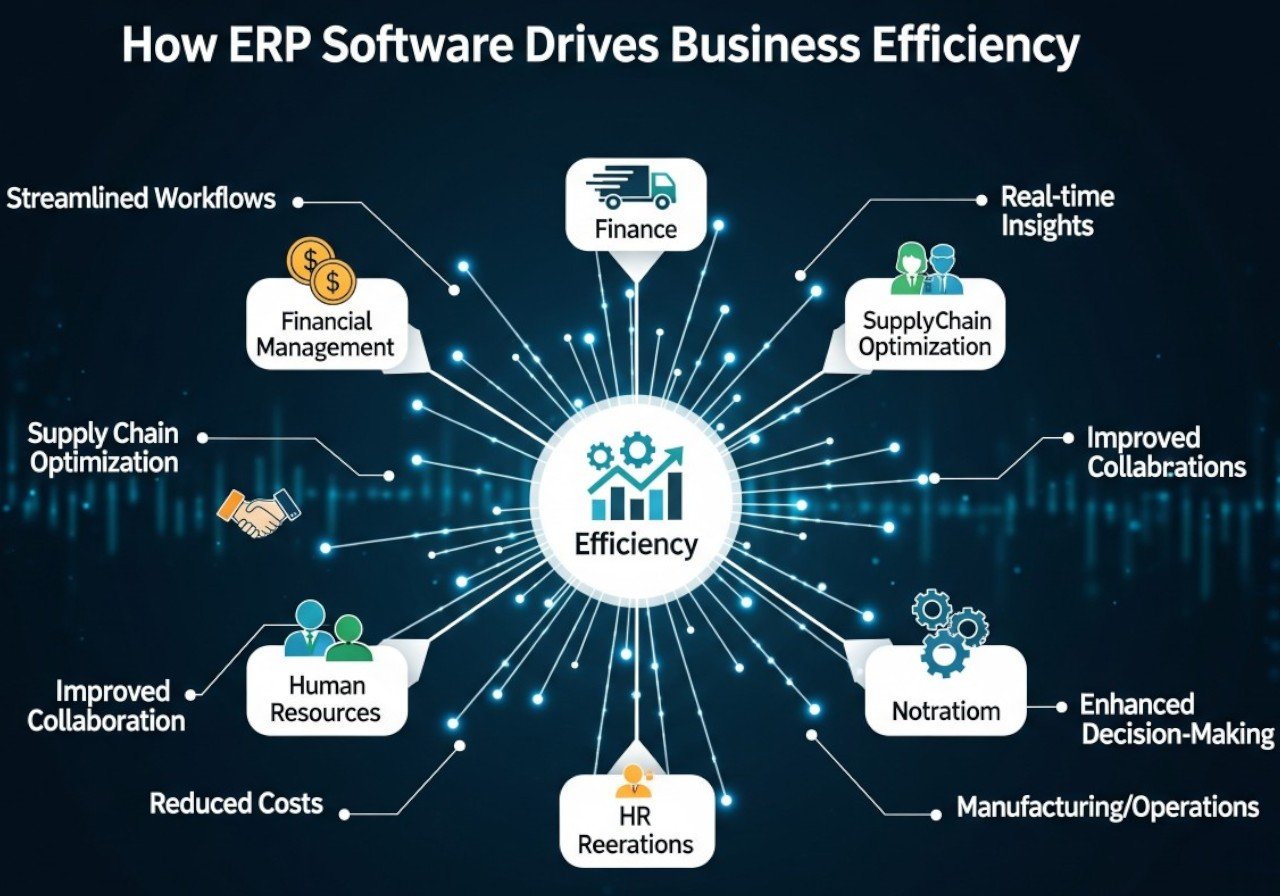
In today’s fast-paced digital age, every business strives to achieve maximum efficiency with minimum resources. However, managing multiple departments with disconnected tools often leads to delays, miscommunication, and errors. That’s where Enterprise Resource Planning (ERP) software comes in. ERP is more than just technology—it is a business performance booster that integrates operations, enhances productivity, and drives growth.
Key Reasons Why Businesses Need ERP Software
- Unified Data Management: Instead of juggling multiple software systems, ERP centralizes information into one database, reducing errors and ensuring consistent access to real-time data.
- Cost Reduction: By automating manual tasks and improving resource utilization, ERP helps businesses save significantly on operational costs.
- Improved Collaboration: Departments can share data seamlessly, breaking silos and creating smoother workflows across the organization.
- Enhanced Customer Satisfaction: With accurate order tracking, faster delivery, and improved support systems, ERP directly improves customer experience.
- Regulatory Compliance: ERP solutions come with built-in compliance features, helping businesses meet industry regulations effortlessly.
Essential Features of Modern ERP Software
- Accounting & Finance: Tracks income, expenses, payroll, and taxes with complete transparency.
- Inventory & Supply Chain: Provides real-time visibility into stock levels, procurement, and delivery management.
- Human Resources: Automates recruitment, attendance, employee performance, and payroll management.
- Sales & CRM Integration: Manages leads, customer interactions, and after-sales service in a streamlined manner.
- Data Security & Analytics: Protects sensitive information and provides insightful reports for better decision-making.
Major Benefits of ERP Software
- Higher Productivity: Employees spend less time on repetitive tasks and more on strategic work.
- Accurate Forecasting: Businesses can make data-driven predictions about future sales, demand, and trends.
- Scalability: As a business grows, ERP adapts to increasing workloads without disrupting operations.
- Faster Decision-Making: Managers get instant access to reports and KPIs, enabling quick and informed decisions.
- Competitive Advantage: Companies using ERP can respond faster to market changes and outperform competitors.
Industry-Specific Impact of ERP
- Manufacturing: Streamlines production cycles, monitors quality, and reduces waste.
- Retail & E-commerce: Improves stock visibility, order processing, and customer satisfaction.
- Healthcare: Manages patient data, billing, and compliance effectively.
- Education: Tracks admissions, examinations, and staff management.
- Construction: Monitors project progress, budgets, and resource allocation.
The Future of ERP Software
- Cloud-Based ERP: Offers flexible and cost-effective solutions for startups and enterprises.
- Artificial Intelligence Integration: Provides predictive analytics and smart recommendations.
- Mobile Accessibility: Enables businesses to operate anytime, anywhere.
- IoT-Enabled ERP: Real-time machine and supply monitoring in industries.
- Sustainability Focus: Helps organizations track and minimize their environmental impact.
Conclusion
ERP software is no longer a luxury—it has become a necessity for businesses that want to grow and stay ahead of the competition. By automating tasks, ensuring transparency, and providing real-time insights, ERP empowers companies to run smarter, faster, and more efficiently. The organizations that adopt ERP today are building a future-ready foundation for long-term success.