
Introduction
Customer Relationship Management (CRM) software is more than just a database for customer information. It’s a comprehensive tool that helps businesses improve relationships, streamline processes, and boost overall growth. In a competitive market, companies that understand and utilize CRM effectively can gain a significant advantage.
CRM software allows businesses to gather customer insights, track interactions, and automate repetitive tasks. Whether you are a small business owner or part of a large enterprise, CRM systems provide the framework to manage customer relationships strategically.
Section 1: What Makes CRM Software Valuable
CRM software centralizes all customer data in one place, making it easily accessible to sales, marketing, and support teams. By keeping track of emails, phone calls, purchase history, and customer preferences, businesses can create a more personalized and seamless experience for clients.
The software also enables better decision-making by offering analytics and reporting features. Companies can identify patterns, understand customer behavior, and develop strategies to enhance engagement and loyalty.
Section 2: Key Benefits of CRM Software
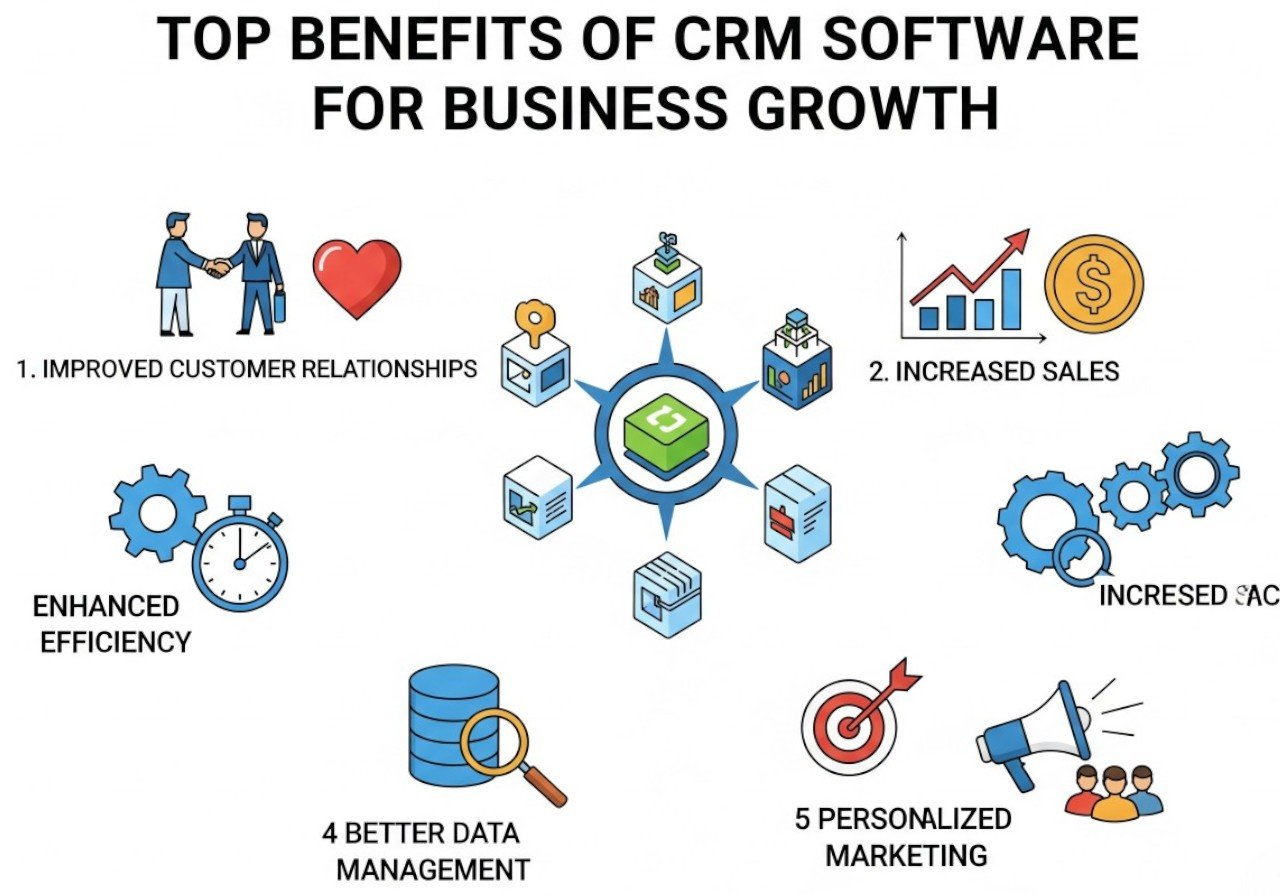
- Improved Customer Relationships: By understanding customer needs and history, businesses can offer personalized communication and solutions.
- Streamlined Sales Processes: CRM helps track leads, manage pipelines, and automate follow-ups, increasing the likelihood of closing deals.
- Enhanced Marketing Campaigns: With insights from CRM, marketing teams can segment customers and run targeted campaigns that generate higher engagement.
- Better Collaboration: Centralized information ensures all departments are aligned, reducing errors and miscommunication.
- Informed Decision-Making: Reporting and analytics allow managers to track performance, identify trends, and make data-driven business decisions.
- Time and Cost Efficiency: Automation of repetitive tasks saves time and reduces operational costs.
Section 3: How Businesses Benefit in Real Life
CRM software benefits businesses across different industries:
- Retail: Track customer purchase history and suggest products, increasing repeat sales.
- Service Industry: Monitor service requests and respond promptly to improve customer satisfaction.
- B2B Companies: Manage long-term relationships with clients, track multiple stakeholders, and close high-value deals efficiently.
- E-Commerce: Automate marketing emails and follow-ups to convert potential customers into loyal buyers.
By leveraging CRM insights, businesses can create strategies that drive growth while building stronger customer relationships.
Section 4: Tips to Maximize CRM Effectiveness
- Set Clear Goals: Define what you want to achieve with CRM—sales growth, better customer retention, or improved marketing.
- Integrate with Other Tools: Combine CRM with email, social media, and other platforms to unify workflows.
- Monitor Performance: Regularly analyze reports and metrics to refine strategies.
- Focus on Customer Experience: Use CRM insights to create personalized, memorable interactions.
Conclusion
CRM software is a powerful tool that goes beyond managing contacts. It improves efficiency, enhances collaboration, and provides the insights necessary for informed decision-making. Businesses that implement CRM effectively can strengthen customer relationships, increase sales, and gain a competitive edge in the market.