
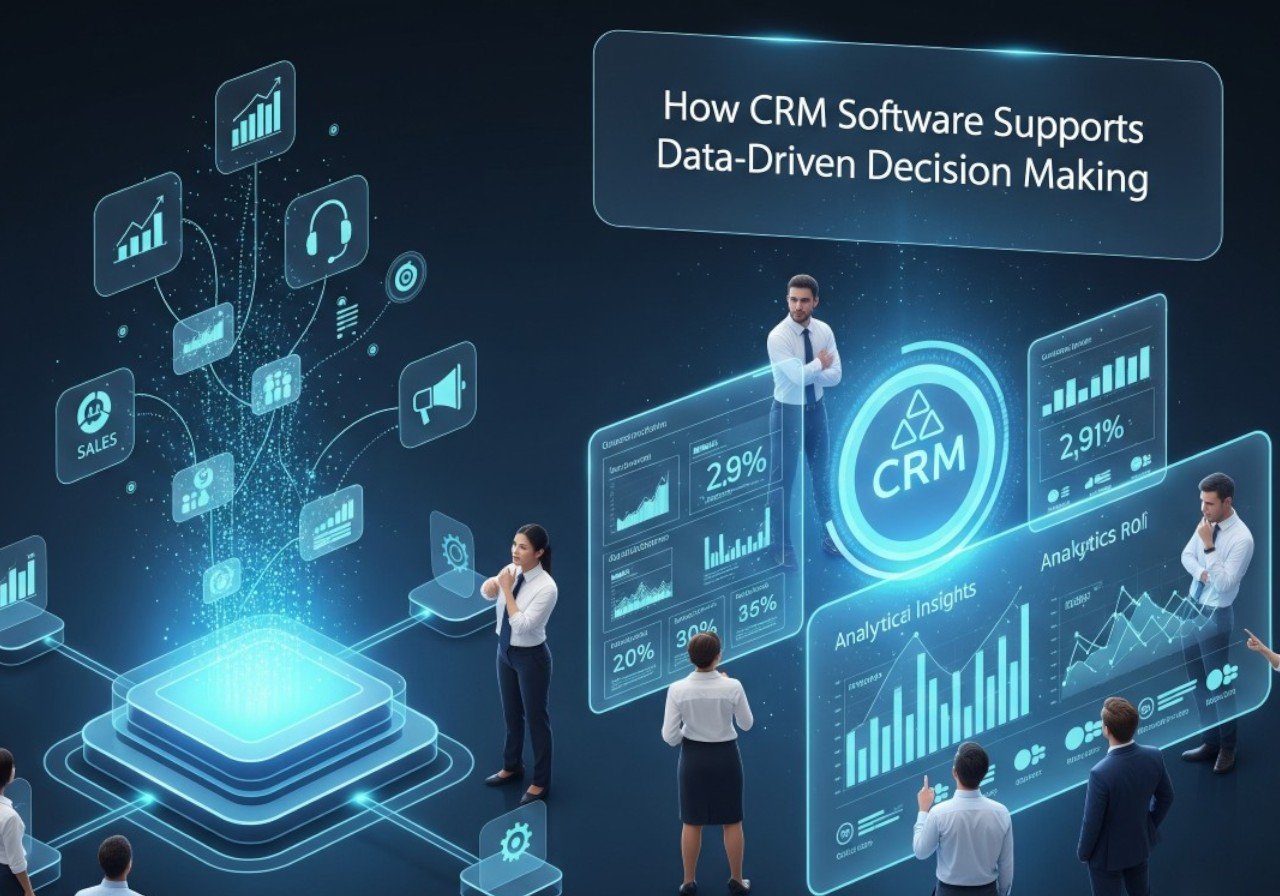
Introduction
In today’s business landscape, making informed decisions is key to growth and competitiveness. Relying on gut feeling or fragmented data can lead to costly mistakes. Customer Relationship Management (CRM) software provides businesses with the insights and analytics needed to make data-driven decisions that improve customer satisfaction, optimize operations, and drive revenue.
With accurate data at their fingertips, companies can identify trends, forecast sales, and adjust strategies effectively.
Section 1: What is CRM Software?
It records communications, purchases, preferences, and service requests, allowing businesses to understand their audience better.
Modern CRMs also include analytics dashboards, reporting tools, and predictive insights. These features allow teams to evaluate performance, track trends, and make strategic decisions backed by reliable data.
Section 2: Key Data-Driven Features of CRM Software
- Advanced Analytics: Track sales trends, customer behavior, and campaign performance in real-time.
- Reporting Dashboards: Visualize key metrics such as conversion rates, revenue growth, and customer engagement.
- Predictive Insights: Use historical data to forecast sales and anticipate customer needs.
- Segmentation Tools: Divide customers into meaningful groups for personalized marketing or support strategies.
- Customizable Metrics: Tailor reports to track the metrics most important for your business goals.
- Integration with Other Tools: Combine CRM data with marketing, e-commerce, or accounting platforms for comprehensive insights.
Section 3: Benefits of Data-Driven Decision Making with CRM
CRM software enables businesses to:
- Make Informed Decisions: Analyze trends and metrics to plan strategies with confidence.
- Optimize Sales and Marketing Efforts: Identify which campaigns, products, or channels perform best.
- Improve Customer Experience: Anticipate customer needs and personalize interactions.
- Forecast Growth: Predict sales trends and allocate resources efficiently.
- Reduce Risk: Base decisions on data rather than assumptions, minimizing errors and missed opportunities.
For instance, an e-commerce business can track which products are most popular during different seasons and stock inventory accordingly. A service company can monitor customer support trends to allocate staff during peak periods, improving satisfaction.
Section 4: Tips for Leveraging CRM Data Effectively
- Define KPIs: Focus on metrics that align with your business goals.
- Regularly Update Data: Accurate and up-to-date information ensures reliable insights.
- Use Visual Reports: Charts and dashboards make complex data easier to understand.
- Integrate Across Departments: Ensure marketing, sales, and support teams share insights for cohesive decision-making.
- Act on Insights: Use data to implement strategies, improve processes, and enhance customer experience.
Conclusion
CRM software is a powerful tool for data-driven decision making. By centralizing customer and business data, providing analytics, and offering actionable insights, it empowers companies to make smarter decisions that drive growth and efficiency.
In today’s competitive market, businesses that leverage CRM data effectively gain a strategic advantage, optimizing operations, enhancing customer experiences, and achieving sustainable success. CRM is not just about managing customers—it’s about making informed choices that propel your business forward.