
Introduction
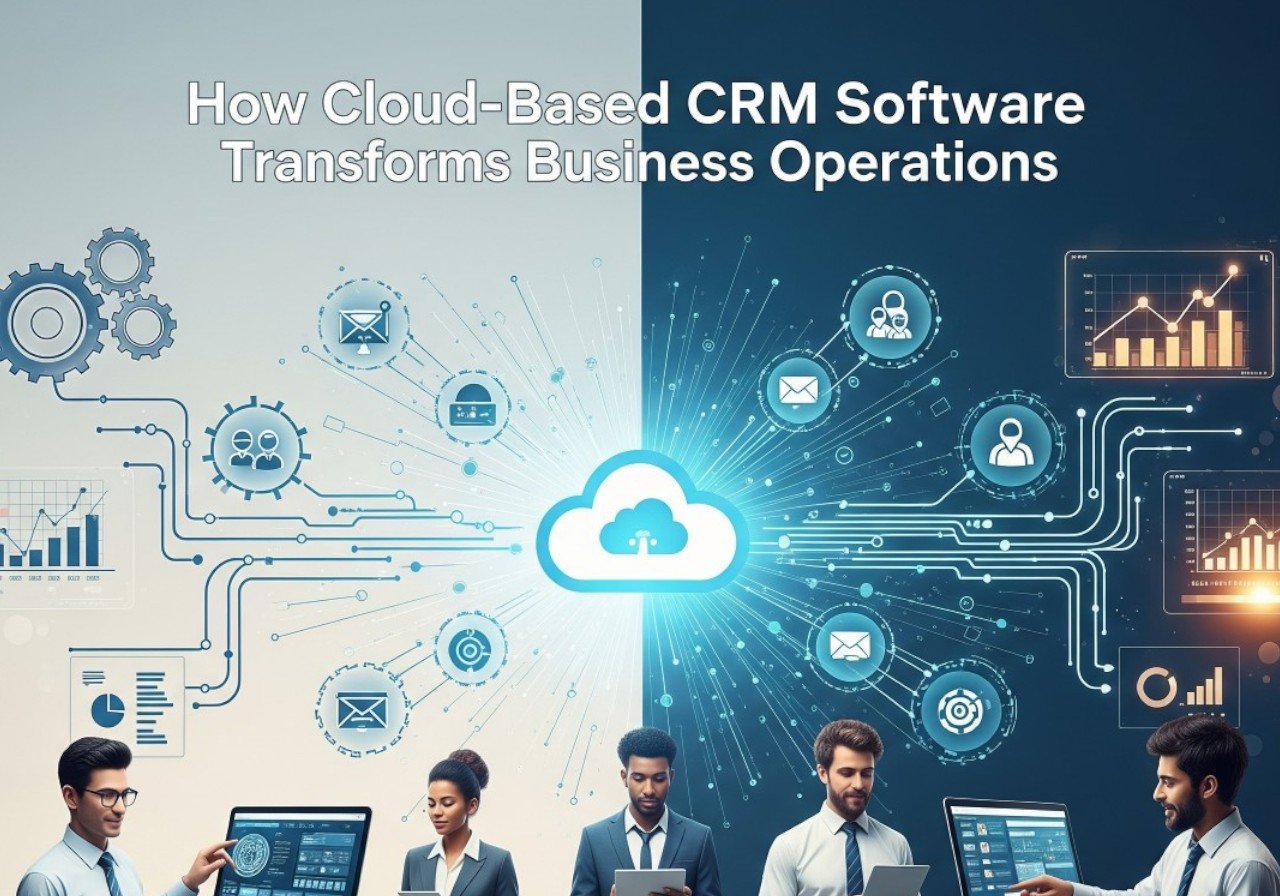
In the digital era, businesses are increasingly turning to cloud-based solutions to enhance efficiency, flexibility, and scalability. Cloud-based Customer Relationship Management (CRM) software has revolutionized the way companies manage customer interactions, providing real-time access, seamless collaboration, and cost-effective solutions.
Unlike traditional on-premise CRMs, cloud-based CRM is hosted on remote servers and accessed via the internet. This shift allows businesses to manage customer data anytime, anywhere, while reducing the need for expensive hardware and IT maintenance.
Section 1: What is Cloud-Based CRM Software?
Cloud-based CRM software is a platform that stores customer data on cloud servers, allowing authorized users to access it through web browsers or mobile applications.
It includes all core CRM functionalities such as contact management, sales tracking, marketing automation, and analytics, while offering additional advantages like scalability, automatic updates, and integration with other cloud-based tools.
Section 2: Key Features of Cloud-Based CRM
- Remote Access: Access customer data and CRM functionalities from any device with an internet connection.
- Automatic Updates: Stay up-to-date with the latest features without manual installation or downtime.
- Integration with Cloud Tools: Connect with email platforms, collaboration tools, and other cloud software seamlessly.
- Enhanced Security: Benefit from cloud providers’ advanced security measures, including encryption and backups.
Section 3: Benefits of Cloud-Based CRM for Businesses
Cloud-based CRM software offers several advantages that transform business operations:
- Improved Accessibility: Teams can access customer data from anywhere, enabling remote work and faster decision-making.
- Enhanced Collaboration: Cloud access allows multiple departments to share real-time information, improving coordination.
- Faster Implementation: Cloud CRMs are quicker to deploy than traditional systems, allowing businesses to start benefiting immediately.
- Reduced IT Burden: Cloud providers handle maintenance, updates, and security, freeing internal teams for strategic work.
- Scalable Growth: As the business expands, cloud-based CRM can accommodate increasing data, users, and processes without disruption.
For example, a multinational company can allow sales teams in different regions to access the same CRM system, track leads, and update customer information in real-time. Similarly, a small business can scale its CRM usage as it grows, without investing in expensive IT infrastructure.
Section 4: Tips for Leveraging Cloud-Based CRM
- Choose a Reliable Provider: Select a CRM provider known for security, uptime, and support.
- Train Your Team: Ensure employees are comfortable accessing and using cloud-based features.
- Regularly Monitor Data: Maintain data accuracy and consistency for better decision-making.
- Leverage Mobile Access: Enable field teams to update and access customer information on the go.
Conclusion
Cloud-based CRM software is transforming the way businesses operate by providing flexibility, scalability, and cost-effectiveness. By offering remote access, seamless collaboration, and advanced security, it empowers teams to manage customer relationships efficiently and make informed decisions in real-time.
For businesses of all sizes, adopting cloud-based CRM is no longer just an option—it is a strategic move that enhances productivity, improves customer experience, and supports sustainable growth in a competitive marketplace.